


Turbo Takeaways
- An emergency fund is a savings account used to easily access funds for unexpected circumstances.
- Experts recommend keeping at least three months of income in your emergency fund to cover a sudden job loss or other major event.
- Emergency funds reduce consumer reliance on credit cards and personal loans when unforeseen costs arise.
What Is an Emergency Fund?
An emergency fund is a separate savings account used to cover unexpected circumstances. The purpose of this kind of fund is to help consumers stay financially resilient in the event of sudden expenses beyond their regular budget and income.
Whether global events create economic struggles or an incident affects you directly, emergency savings help you avoid debt and supplement income.
Did You Know?
Only 46% of American consumers have enough money saved to cover three months of living expenses, according to Bankrate.
True emergencies are events that happen beyond your typical expenses and any splurges or wants. This means that a visit to the ER is an emergency worthy of pulling cash from your fund, while a flash sale on a cruise is not.
Emergency funds should provide liquid (easily accessible) cash in some form of a savings account. Examples of liquid savings accounts include:
- Basic savings
- High-yield savings
- Money market accounts
Avoid using CDs and ROTH IRAs for an emergency fund. These accounts aren’t easy to withdraw, and you’ll typically face penalties for withdrawing money before a certain time period has passed or under certain circumstances.
How Much Should You Put Into an Emergency Fund?
Start by setting aside at least $1,000 for an initial amount as soon as you begin earning income. Experts recommend keeping an emergency fund stocked with enough money to provide income for three to six months.
How much to save for a fully funded emergency account depends on your income and expenses. Consider how much you’ll require to pay for essentials like your mortgage, car payments, groceries, and utilities (including your phone and internet), and save to cover these for several months.
Even as you save, it’s important to focus on paying off debts. Balance savings with debt repayment, only forgoing payoff if your emergency costs more than you can cover with your account. An emergency fund calculator can also help you get started.
How To Build an Emergency Fund
With financial planning and self-controlled spending, you can set up an emergency fund to offset debt. Here are some key steps to take:
1. Budget
Setting up a budget lets you see how much you can allocate to an emergency fund. Tracking your income versus expenses ensures you can pay for essentials like housing, food, utilities, and transportation before putting aside funds for an emergency. Use an app or create a spreadsheet to enter dollar amounts based on your spending and take-home pay.
2. Start an Automatic Withdrawal
Consider adding to an emergency fund by setting up an automatic withdrawal from your paycheck. Even allocating $25 once or twice a month creates a cushion from debt in the event of an unforeseen expense. The more you send to the fund, the faster you’ll build your emergency savings and can start saving for something else, like a vacation.
3. Decrease Spending
Once you set up a budget, save as much money as you can after paying off essential bills. Challenge yourself to have no-spend weeks or even a no-spend month to avoid buying anything beyond your basic needs. Look for ways to cut spending on items like streaming and subscription services, restaurant food and beverages, and entertainment.
4. Get a Side Hustle
In some cases, the only way to build an emergency fund is to take on extra work. Consider earning additional cash through seasonal jobs, delivery services, freelance projects, or by using your skills to get paid for tutoring or consulting. You can typically save enough to build emergency savings after a short time of additional work.
5. Refill Your Fund
Using your emergency fund when necessary is important, but the work isn't done once the crisis passes. Make it a habit to rebuild your balance as soon as things stabilize. Even small, consistent contributions can get you back to your target amount faster than you'd expect. Prioritize refilling your fund the same way you built it up in the first place.
Emergency Fund Example: Family of Four
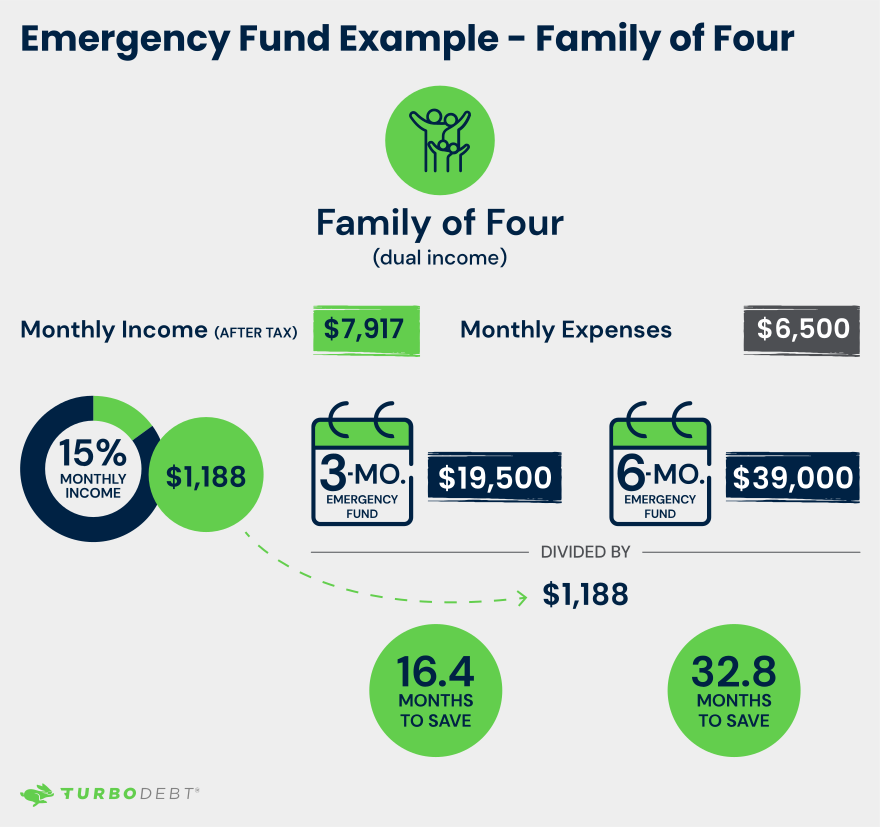
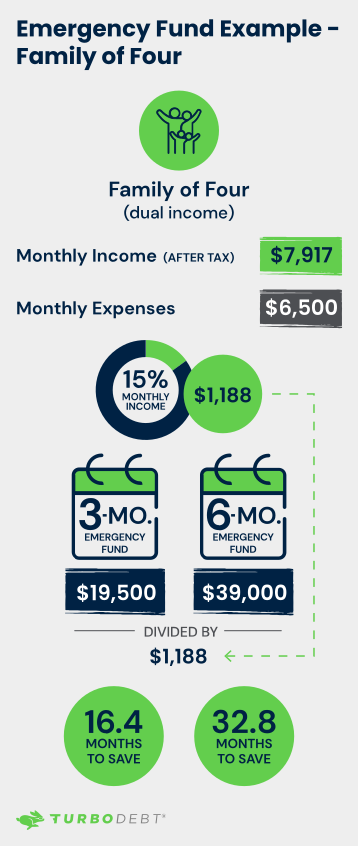
Imagine expenses for a family of four, with dual-income earners bringing home $7,917 per month after taxes. Their total monthly expenses come to $6,500, covering housing, groceries, transportation, insurance, childcare, and general costs.
Using the savings rate from the Turbo 3Ts Budget Strategy, 30% of income is allocated to the Target category, which covers savings, financial stability, and longer-term goals.
Within this framework, 15% of their total monthly income is designated specifically for emergency savings. For this household, that works out to $1,188 per month going into an emergency fund.
Dividing the savings goal by the monthly contribution shows how long it realistically takes to get there. A 3-month fund based on $6,500 in monthly expenses requires $19,500, and at $1,188 per month, that takes about 16 months. A fully funded 6-month cushion of $39,000 takes roughly 33 months to build.
This timeline may last longer than you'd expect. That's because the TurboDebt® 3Ts method focuses on debt repayment first, enabling steady, sustainable savings that don't require drastic spending cuts.
Emergency Fund Example: Single Individual
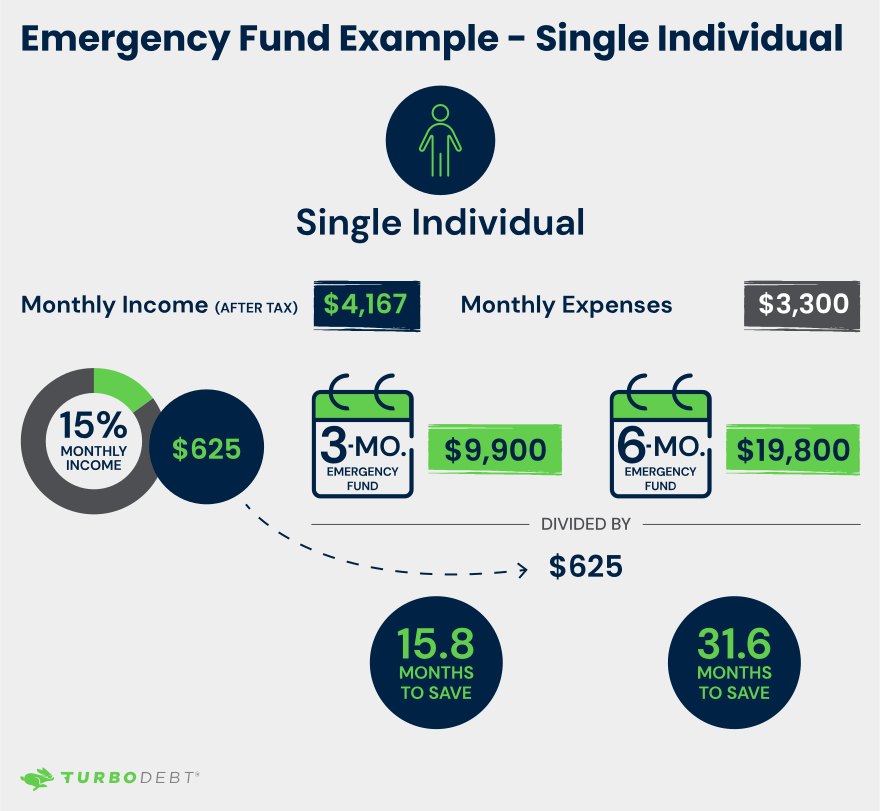
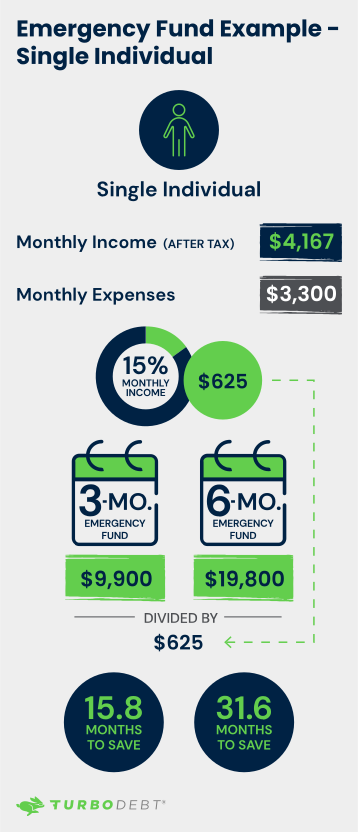
For a single individual earning $4,167 per month after taxes, the same 15% allocation comes to $625 per month. Monthly expenses for this consumer (housing, groceries, transportation, insurance, and other essentials) add up to $3,300.
The lower expense total means the savings targets are smaller: $9,900 for a 3-month fund and $19,800 for 6 months. At $625 per month, the 3-month goal also takes around 16 months, and the full 6-month fund takes just over 31 months.
You may notice the timeline for individuals is actually similar to the family example, even though the dollar amounts differ. That's because the savings rate is tied to income, not expenses. A lower income means a smaller monthly contribution, which offsets the lower savings target. The pace is comparable regardless of household size.
Emergency Funds vs. Other Savings Accounts
The main focus of an emergency fund is to store money you can access quickly. Liquid assets, like a savings account, are helpful for creating a reserve of cash but don’t yield much in the way of returns. In other words, emergency funds aren’t an investment strategy but rather a way to avoid debt.
Building an emergency fund requires you to funnel extra cash into savings quickly so you’re ready for the unexpected. This focused savings strategy complements a budget and debt repayment. Make building your fund a priority until you save enough to offset unexpected costs without going into debt.
Create an Emergency Fund To Avoid Debt
Emergency funds are an important way to avoid debt and build wealth for the future. With extra cash to cover unforeseen circumstances, you can skip taking out personal loans at high interest or charging large balances on a credit card.
Even if you start small, it’s worth it. Use effective strategies to pay off debt, save more, and build your fund quickly, like automating part of your paycheck into a basic savings or money market account. Look for ways to cut spending, because even a little bit can add up over the year.
Creating an emergency fund is part of an effective strategy for managing your money well. With planning and commitment, you can build a strong financial cushion, giving yourself security and resiliency in the face of unforeseen events.
Pay Off Debt With Help From TurboDebt®
Before you can focus on building an emergency fund, it’s essential to start paying off debt. TurboDebt® offers customized debt relief plans to aid consumers, along with resources to stay financially savvy. We help clients reduce their total debt, saving them up to 45% of what they owe creditors (before fees).
With over 20,000 positive TurboDebt reviews across Google and Trustpilot, we’ve proven ourselves as a trusted partner for debt relief. It only takes a few minutes to find out if you qualify for our accredited debt relief program.
Contact the experts at TurboDebt today to start your free consultation!